


Genital Skin Tag Removal; A Clear, Simple Guide
Introduction
Skin tags (soft, harmless little skin growths) can be worrying and embarrassing when they appear in the genital area. Medically they are usually benign, but they may look bothersome, itch, snag on underwear, or even bleed a little. The good news is that removing genital skin tags is an outpatient, quick, low-risk procedure. In this article, we explain in simple language what genital skin tags are, why they appear, when removal is recommended, the different removal methods, and the aftercare you’ll need.

What Is a Genital Skin Tag?
A skin tag is a soft, fleshy, usually skin-colored bump attached to the skin by a small stalk. In everyday language, people call them “extra skin.” They can appear on the vulva, labia, groin, around the anus, and sometimes on the penis. They are not cancerous and are mostly a cosmetic issue or a physical nuisance.
Important note: A skin tag is different from a genital wart (HPV). Warts usually have a rough or cauliflower-like surface and are contagious; skin tags are soft and harmless. A doctor makes the final diagnosis.
Why Do Genital Skin Tags Develop? (Causes)
– Friction and repeated rubbing (tight clothing, sports, excess weight)
– Genetics (more common in some families)
– Hormonal changes (for example, pregnancy)
– Age (more frequent as we get older)
– Diabetes and insulin resistance: there is a statistical association, but having a skin tag does not mean you have diabetes
When Is Skin Tag Removal Recommended?
– Cosmetic concern: feeling unhappy about the appearance
– Troublesome symptoms: itching, burning, snagging, repeated irritation
– Bleeding or shape change: rapid growth, color change, or pain
– Diagnostic uncertainty: when the doctor needs to distinguish it from other lesions (such as warts)
Skin Tag Removal Methods (Step by Step)
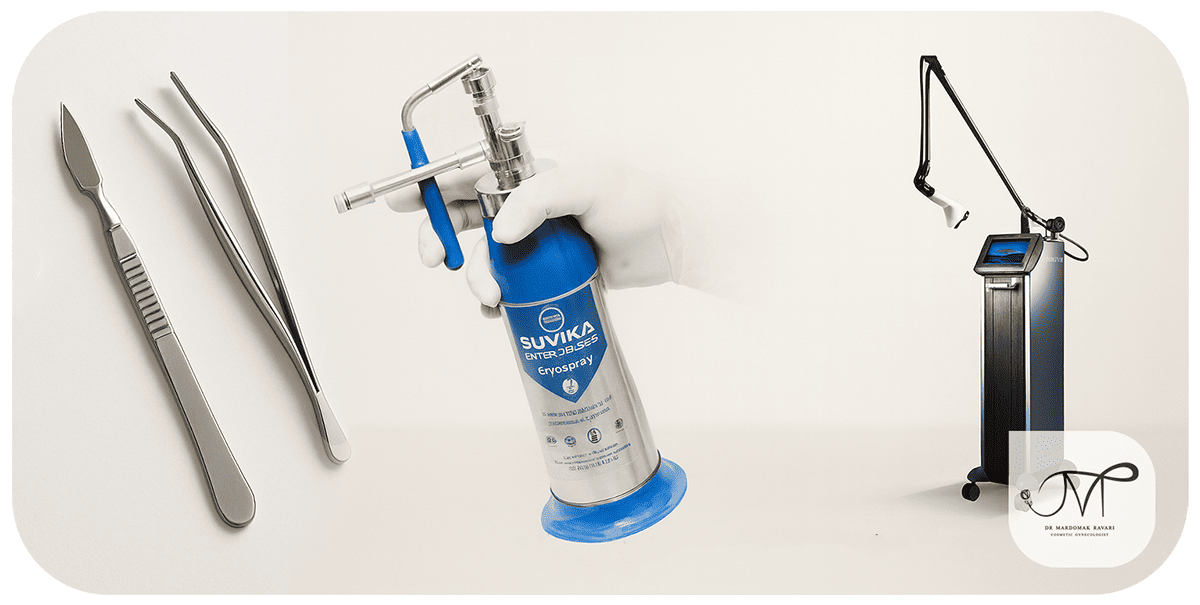
All methods are outpatient and usually done in the clinic. The best option depends on the size and location of the tag, your skin, and your doctor’s judgment.
1) Cauterization (burning with electrical current)
How it’s done: local anesthetic; an electrocautery device is used to burn the stalk and separate the tag.
Pros: fast, minimal bleeding, suitable for multiple lesions.
Cons: possible temporary discoloration or a tiny mark, a few days of stinging.
2) Cryotherapy (freezing with liquid nitrogen)
How it’s done: brief contact of liquid nitrogen with the lesion; it falls off after a few days.
Pros: no cutting, good for small tags.
Cons: depth control is trickier; possible blistering or temporary color change.
3) Snip excision (cutting the stalk with fine scissors)
How it’s done: local anesthetic; the stalk is cut with sterile scissors; bleeding is controlled with cautery or a stitch.
Pros: precise; the specimen can be sent to pathology.
Cons: needs simple wound care; a tiny stitch may be used.
4) Ligation (tying off the stalk with special thread)
How it’s done: tightly tying the base to cut off blood supply so the tag drops off in a few days.
Pros: simple and low-cost.
Cons: a few days of discomfort; best for clearly stalked tags.
5) Laser (CO₂ or diode)
How it’s done: controlled vaporization of the lesion with a laser under local anesthesia.
Pros: high precision, minimal bleeding, clean healing.
Cons: higher cost; requires specialized equipment.
Benefits and Drawbacks of Removing Genital Skin Tags
Benefits
- Improves appearance and confidence
- Stops snagging and irritation during exercise or sex
- Outpatient, quick, and low-risk
- Pathology review is possible when needed
Drawbacks
- Mild redness, stinging, or tenderness for a few days
- Small chance of a faint mark or temporary color change
- New lesions may appear later due to individual tendency
- Short period of self-care is needed
Before and After Care
Before the procedure
- Avoid shaving: aggressive shaving can irritate the area. If needed, trim carefully with clean scissors.
- Treat any active infection first (fungal or bacterial).
- Tell your doctor if you take blood thinners.
After the procedure
- Keep the area dry and clean for 24–48 hours; then wash gently with lukewarm water.
- Wear breathable, loose cotton underwear.
- Use healing ointment or a topical antibiotic as advised by your doctor.
- Heavy exercise and sexual activity: usually avoid for 3–7 days (depends on method and extent).
- Contact your doctor promptly if you have pain, foul-smelling discharge, fever, or unusual bleeding.
Skin Tag vs. Genital Wart (Very Important)
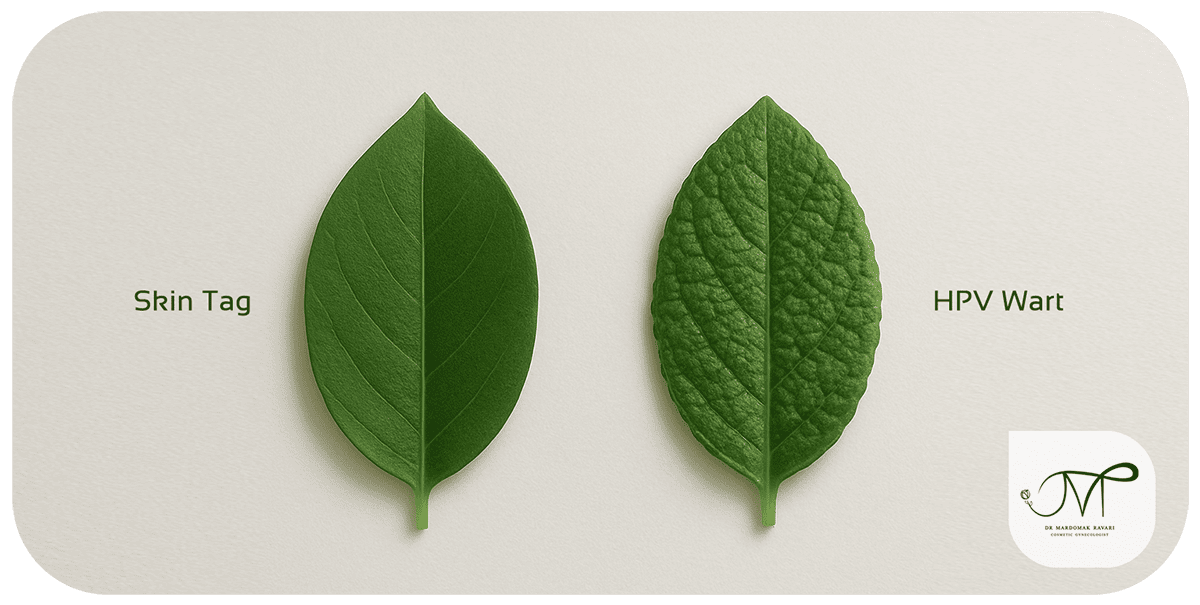
Many women feel a bump in the genital area and immediately think it’s a “genital wart.” In reality, many of these bumps are harmless skin tags. Telling them apart matters because their management and consequences are quite different.
1) Nature and cause
– Skin tag: benign skin growth. Main triggers include friction, genetics, hormonal shifts (such as pregnancy), aging, or extra weight. Not caused by a virus, and not infectious.
– Genital wart: caused by HPV (human papillomavirus). Transmitted through sexual contact. Some high-risk HPV types are linked to cervical cancer. Considered a sexually transmitted infection.
2) Look and feel
– Skin tag: soft, fleshy, usually skin-colored or slightly darker; often on a stalk; smooth or slightly wrinkled surface; often single or few.
– Genital wart: rough, raised, often “cauliflower-like”; may be white, pink, or brown; can appear in clusters; may grow or spread.
3) Associated symptoms
– Skin tag: usually symptom-free; may itch or bleed slightly from friction; does not cause serious problems beyond appearance or snagging.
– Genital wart: may cause itching, burning, or discharge; can make sex uncomfortable; sometimes asymptomatic except for visible lesions.
4) Risk and consequences
– Skin tag: benign and harmless; does not become cancerous; mainly cosmetic or mechanical nuisance.
– Genital wart: must be taken seriously due to HPV; some HPV types raise the risk of cancers of the cervix, anus, or penis; needs follow-up and sometimes repeated treatment.
5) Contagiousness
– Skin tag: not contagious.
– Genital wart: highly contagious via sexual contact (condoms reduce but do not eliminate risk).
6) Treatment and follow-up
– Skin tag: removed only if bothersome (laser, cautery, cryo, snip); usually a one-time fix.
– Genital wart: treated with topical medications, laser, cautery, or cryotherapy; may require multiple sessions and regular follow-up; sexual partner should also be evaluated.
7) Simple analogy
– Skin tag is like a small “extra piece of skin” that can be irritated by clothing or movement and poses no risk to a partner.
– Genital wart is a “viral skin infection” that can spread to others and, if ignored, may lead to bigger problems.
Summary of differences (comparison table)
|
Feature |
Genital Skin Tag | Genital Wart |
|
Cause |
Friction, genetics, hormones |
HPV virus |
|
Risk |
Harmless, non-cancerous |
Infection risk and cancer links |
|
Appearance |
Soft, stalked, smooth |
Rough, cauliflower-like, clustered |
|
Contagious |
❌ No |
✅ Yes |
|
Symptoms |
Usually none |
Itching or burning possible |
| Treatment | One-time, cosmetic | Often needs repeated care and follow-up |
Key point: A definitive diagnosis between a skin tag and a wart should be made by a gynecologist or dermatologist. Any lesion that changes shape, grows quickly, or bleeds should be checked promptly.

Patient Stories (Short Real-Life Notes)
– Elham, 30: “Two tags on my labia bothered me. We removed them with laser; I went back to work the same day. Only mild stinging for two days.”
– Fatemeh, 37: “They kept snagging during cycling and would bleed. The doctor removed them with cautery; it looks much better and no more irritation.”
– Mina, 26: “I thought it was a wart and was stressed. The exam showed a skin tag. It was snipped off and sent to pathology. I felt relieved.”
Conclusion
Genital skin tag removal is simple, outpatient, and low-risk. It can improve the look of the area and stop day-to-day irritation. The most important step is accurate diagnosis (distinguishing from genital warts) and choosing the right method with your doctor. If you have a bothersome lesion, you can have it removed quickly with minimal hassle and return to your routine with peace of mind.
Similar Articles

Get rid of skin tags with a brief visit
Submit your number now and our assistant will contact you as soon as possible.
 FAQ
FAQ
No comments have been posted.
Your email address will not be published. Required fields are marked *
Share:


tags: